

Duskfade wears its influences openly. Within minutes of starting, the clockwork-fantasy world, the young hero with a mechanical bird companion, and the lock-on sword combat all point clearly to the early-2000s action-platformers that inspired it (Jak and Daxter, Ratchet & Clank, Kingdom Hearts in particular). For players who grew up with those games and have been waiting for something to scratch that specific itch, Duskfade delivers more often than not.
A World Worth Exploring
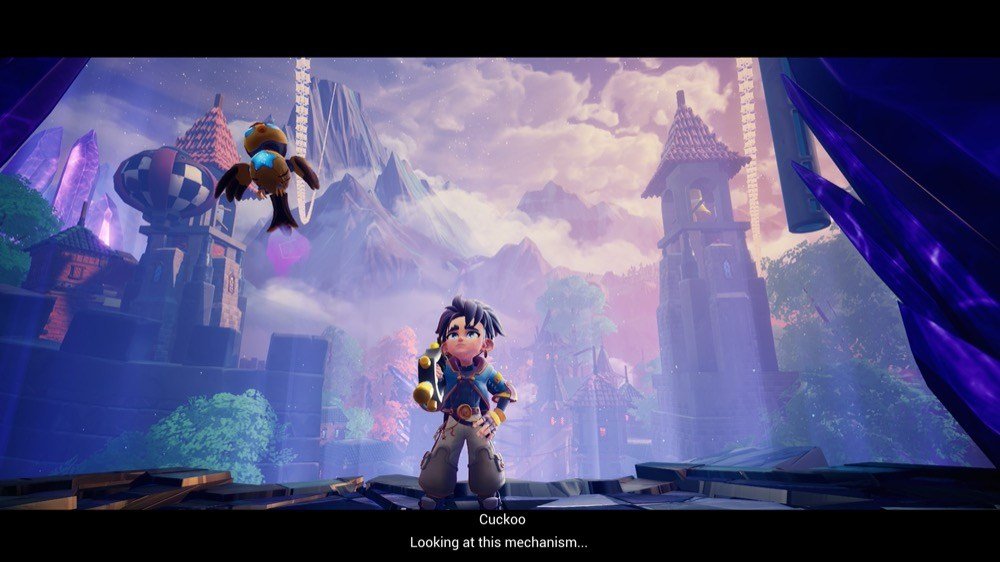
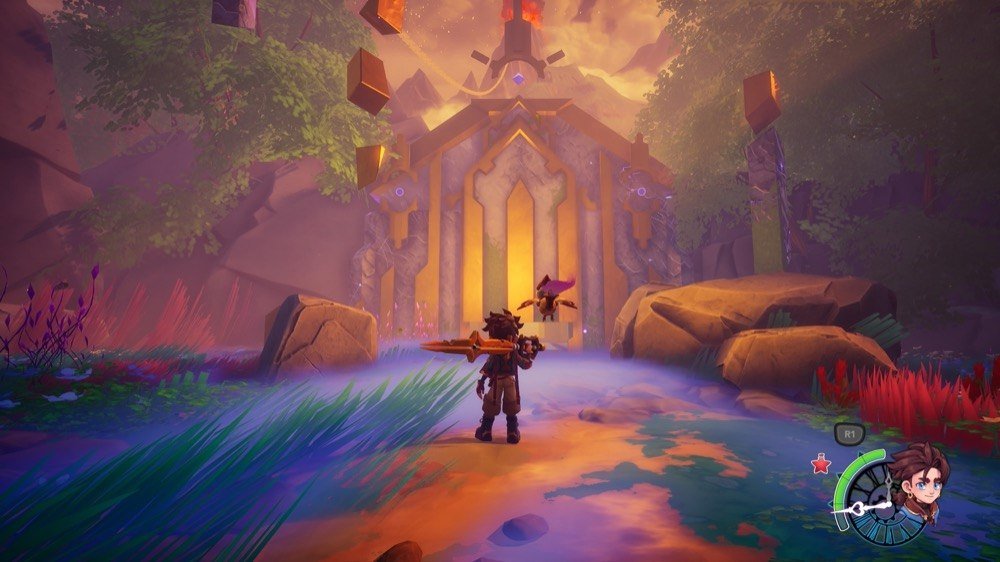
The premise sets up Zirian, a clockmaker-in-training, travelling through forests, underwater areas, deserts, and cloud-filled heights to rescue his sister and restore time to a world cast into permanent night. It’s a coming-of-age story about loss and grief wrapped in a bright, fantastical setting, and the tonal balance works well enough to carry you through. The clockpunk aesthetic is consistently charming, and the level variety keeps environments feeling fresh even when the map itself starts to feel familiar.
Traversal is the game’s strongest suit. Jumping, dashing, grappling, gliding, and swinging all feel satisfying, and unlocking new movement abilities that open previously inaccessible areas gives exploration a light Metroidvania rhythm that suits the structure well.
Combat Gets the Job Done, Mostly
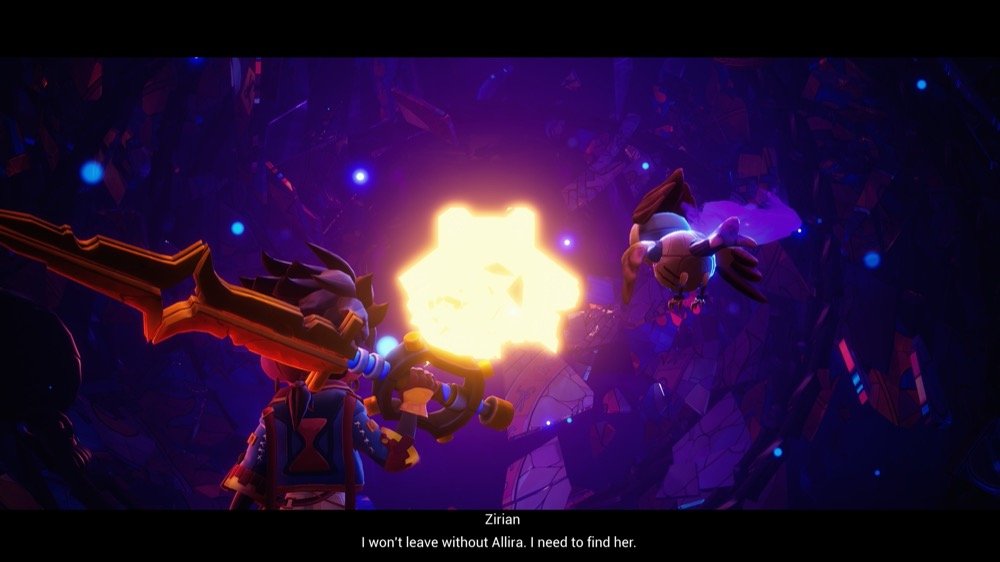
The combat is where Duskfade shows its limitations most clearly. The foundation is basic: lock-on sword fighting that gets the job done but doesn’t offer much variety in the early hours. New abilities are introduced gradually, and the difficulty levels ensure there’s still a decent challenge to work through, but the core loop doesn’t evolve dramatically. If you’re coming from modern action games expecting tightly tuned combat, it may feel underwhelming. If you can meet it on its own terms as a throwback, the repetitiveness is easier to forgive.
Lock-on behaviour can also be awkward in busier encounters, which occasionally works against you more than the enemies do.
Exploration Has Its Friction Points
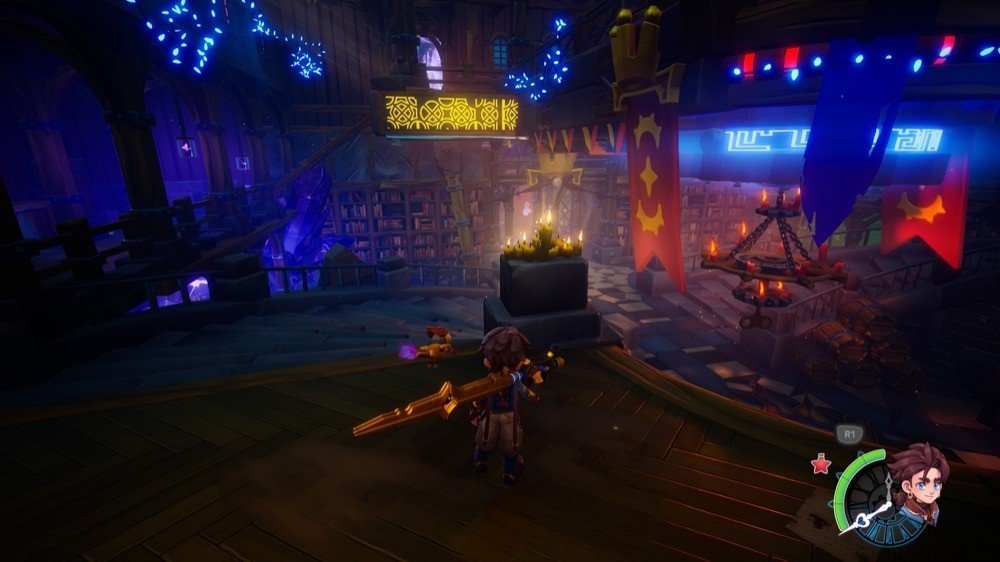
The maps are relatively compact, which isn’t inherently a problem, but fast travel points are sparse enough that backtracking through familiar areas becomes a recurring part of the experience. Enemies respawn when you return from the hub, so repeated trips through the same paths quickly start to feel like padding. Navigation guidance is also light — getting stuck without clear direction means retracing ground you’ve already covered more than once.
Character Design Plays It Safe
Zirian himself feels like a close relative of Sora from Kingdom Hearts, down to the visual design and even his sword, which carries a strong resemblance to Sora’s iconic Keyblade. It’s a likeness hard to ignore once you notice it. Cuckoo and the enemy roster on the other hand, it’s less a case of borrowing and more one of missed opportunity. A mechanical bird companion literally named after the clock it came from, and enemies that don’t offer much variety or personality, suggest the creative ambition that went into the world design didn’t quite extend to the characters inhabiting it.
A Worthwhile Throwback, Flaws and All
Duskfade is a polished and genuinely enjoyable indie effort that captures the spirit of early-2000s action-platformers well enough to recommend, especially to players with nostalgia for that era. Its traversal is satisfying, its world is colourful and imaginative, and the overall package punches above its weight for an indie release. The combat repetitiveness, sparse fast travel, and borrowed character aesthetics hold it back from being something truly memorable, but they don’t undermine what makes it appealing in the first place.
If you miss games like Jak and Daxter or the early Kingdom Hearts entries and can tolerate a few rough edges, Duskfade is worth your time.
